
Our Blog

Bridging the 5-Year Gap: Off-Grid and Behind-the-Meter Gas Power Generation for Data Centers
 July 7, 2025 | Blog
Bridging the 5-Year Gap: Off-Grid and Behind-the-Meter Gas Power Generation for Data Centers
The U.S. power grid is struggling to keep pace with the explosive growth in data center demand. Across ERCOT, SPP, and MISO, delays in interconnection approvals stretch well beyond five years, leaving developers in limbo while digital infrastructure needs soar.
As demand intensifies from AI training, cloud computing, and 5G edge applications, grid expansion is outpaced by regulatory backlogs and logistical constraints. For data center operators, this delay isn’t just inconvenient—it’s a critical risk.
Across the U.S., the interconnection queue to get connected to the grid has now increased to up to five years, according to Berkeley Lab. The U.S. power demand behind these generation facilities is expected to rise from 180-290 TWh in 2024 to 515-720 TWh by 2030, according to Deloitte. This represents a 15% to 17% annual growth rate. Currently, data centers consume 6% to 8% of total electricity generated in the U.S. By 2030, data center power demand is forecasted to increase to 11% to 15% of total U.S. power generation.
To bridge this gap in need, off-grid and behind-the-meter (BTM) natural gas generation has emerged as a viable, scalable solution. With rapid deployment timelines and high uptime reliability, on-site gas power generation is the pragmatic choice to meet today’s digital power generation demands.
Key Takeaways
- Grid connection delays now stretch up to five years for new data centers
- Data center electricity demand is forecasted to reach 515-720 TWh by 2030
- Natural gas provides reliable off-grid power within 18-24 months
- Direct natural gas pipeline connections to off-grid and BTM power generation is a means to eliminate grid interconnection delays
- Gas turbine technology meets data center reliability requirements

Introduction
The data center industry is currently facing unprecedented challenges. It must meet explosive power demands while, due to a large amount of interconnection requests and activity, grid connections lag years behind.
Natural gas power is at the forefront of this transition. Currently, natural gas power generation constitutes 43% of U.S. electricity. Natural gas power generation offers proven reliability that data center developers desperately need. This energy solution provides immediate deployment capabilities while maintaining the uptime requirements essential for modern AI and cloud computing infrastructure.
The shift toward off-grid or BTM natural gas power isn’t just about filling gaps—it’s about creating resilient, scalable infrastructure. While battery storage plays a role in very short-term backup scenarios, gas generation delivers the continuous baseload power to meet the energy requirements of data center solutions. Gas power plant technology has evolved to meet these demands with rapid deployment timelines and proven operational reliability.
The key distinction between off-grid and BTM natural gas generation lies in their relationship to the utility grid. Off-grid systems operate entirely independently, supplying 100% of the facility’s power needs without any reliance on utility infrastructure—ideal for sites where grid access is unavailable or delayed. In contrast, BTM systems are physically connected to the grid but primarily serve on-site loads, offering resilience by reducing dependence on grid-delivered power and enabling operators to optimize for cost, uptime, or both. This flexibility allows data centers to maintain control over reliability while navigating complex interconnection timelines due to high demand of interconnections.
Outside of data center development, U.S. federal policies promoting domestic manufacturing have intensified this need. According to Deloitte, between January 2021 and March 2023, companies announced over 150 new onshore facilities, each requiring substantial incremental power infrastructure. This surge compounds existing challenges, making off-grid or BTM power generation capacity solutions not just beneficial but essential for maintaining competitive advantage in the rapidly evolving digital economy.
The Surge in Data Center Power Demand
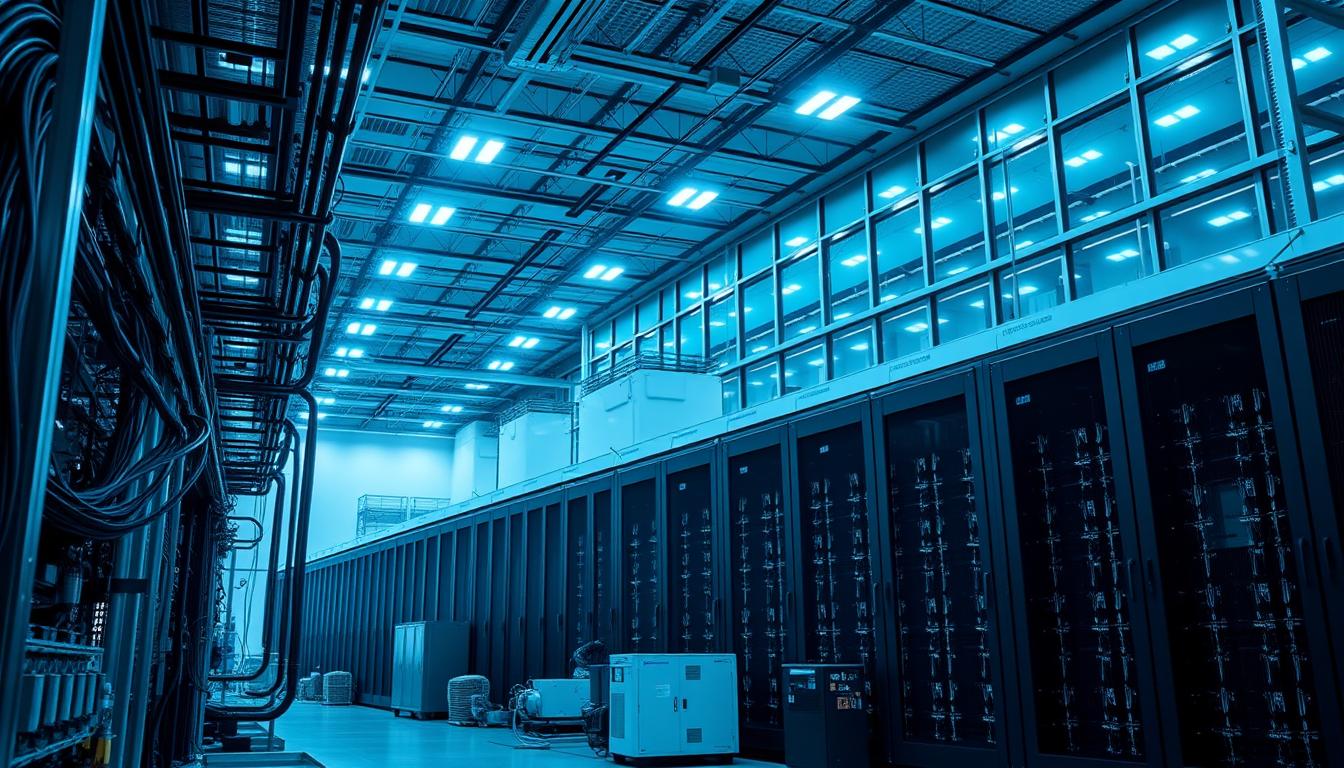
The data center sector is experiencing rapid growth in power demand, driven by artificial intelligence, machine learning, and cryptocurrency operations. Deloitte reports that nearly 75% of major U.S. electric utilities report an increase in electricity requests from data centers. This surge poses significant challenges for power system planning and infrastructure development.
AI-powered facilities require substantial energy resources, with power demand ranging from 50 MW for smaller installations to massive 1,000 MW for hyperscale operations. Tech giants are tackling this challenge with creative solutions. Microsoft has an agreement with Constellation Energy to restart the Three Mile Island nuclear facility. Google has partnered with Origis Energy to develop dedicated power plants for Tennessee operations.
Data Center Types & Reliability Needs
Not all data centers are built the same. Different data center project types have come with varying power reliability needs, based on their intended operational functions. The Uptime Institute ranks data centers through four distinct tier certification levels: Tier I, Tier II, Tier III, and Tier IV. In terms of availability, Tier I has the most expected downtime or worst performance, while Tier IV offers the least anticipated downtime or best performance.
Enterprise Facilities
Enterprise data centers are privately owned and operated by a single organization—typically large corporations—for internal data processing, storage, and IT infrastructure. These facilities often support core business operations, meaning uptime and data integrity are mission-critical. While they may not always operate at hyperscale volumes, they require consistent base-load power, secure backup systems, and redundancy plans to meet internal service level agreements. Enterprise centers typically prioritize security, availability, and compliance, relying on reliable, in-house power infrastructure to ensure uninterrupted operations. Enterprise data centers typically require Tier III reliability levels, though some may aim for Tier IV depending on criticality of operations.
Colocation Facilities
Colocation data centers provide physical space, cooling, power, and bandwidth to multiple tenants who install and manage their own hardware. These facilities must offer scalable and compartmentalized power delivery tailored to a range of clients—each with different workloads and performance needs. To remain competitive, colocation providers must deliver near-universal uptime guarantees (often Tier III or IV) while allowing for flexible power provisioning. The shared model makes power density management and redundancy design especially important in this setting.
AI-Training Data Centers
AI-training facilities are designed specifically to support high-performance computing workloads such as machine learning model development, neural network processing, and data simulation. These operations are compute-intensive, power-dense, and often run 24/7 for weeks or months at a time. As a result, they demand ultra-reliable Tier IV, high-capacity base-load power with minimal fluctuation. Downtime or throttling can disrupt learning cycles and waste expensive GPU compute time, making energy reliability a top operational priority.
Hyperscale Centers
Hyperscale data centers are vast, single-tenant facilities typically owned by tech giants like Google, Amazon, or Microsoft. They power large-scale cloud platforms, SaaS applications, and global digital infrastructure. These centers require predictable, massive volumes of power—often hundreds of megawatts—delivered consistently across thousands of servers. Due to their scale, hyperscale centers often build in dedicated utility feeds, custom substations, and even proprietary generation assets to ensure power availability and operational efficiency.
Hyperscaler data centers typically require Tier III or Tier IV reliability levels, depending on the specific application and service-level agreements.
Most opt for Tier III as a baseline for concurrent maintainability, while Tier IV is adopted for mission-critical zones requiring full fault tolerance and maximum uptime.
Peak vs Base-Load Consumption Patterns
Understanding consumption patterns is key to designing efficient solutions for data centers. Base loads typically operate at 60-70% of total capacity continuously, while peak demands occur during high-computation periods. A new data center must balance these requirements with available infrastructure, making off grid or BTM generation increasingly attractive for the data center sector.
Understanding Interconnection Queue Delays
Due to an extremely high number of interconnection requests, Ggrid interconnection has become a critical bottleneck for hyperscale data centers seeking reliable power supply. U.S. electric utilities now face unprecedented capital expenditure demands reaching $174 billion by the end of 2024, alone. Nearly half of this investment targets transmission and distribution infrastructure upgrades. These massive infrastructure investments directly impact how quickly data center customers can access the energy demand capacity they need.
ERCOT’s 137 GW Queue Backlog
The Electric Reliability Council of Texas faces a staggering 137 gigawatts of pending interconnection requests. This backlog represents years of waiting for data center campus developments. Much of this demand is driven by:
- Surging cloud computing growth.
- Expanding AI and machine learning applications.
- Rapid rollout of 5G and edge computing requiring localized mini data hubs.
Data center companies seeking power needs face extended timelines that push operational dates well beyond initial projections. Despite ERCOT’s “energy-only” market and streamlined permitting compared to other ISOs, it remains bogged down by volume and complexity.
SPP’s LOLE Study & Approval Timeline
Southwest Power Pool requires extensive Loss of Load Expectation studies before approving new connections. These studies now take 18-24 months to complete. Data center customers must navigate complex reliability assessments while their power needs remain unmet. These studies delay interconnections for 2–3 years, stalling even shovel-ready projects.
MISO’s Capacity Cap Proposal
Midcontinent Independent System Operator introduced capacity limits on new interconnections. This proposal restricts how much power supply individual projects can request. Hyperscale data centers requiring 100+ MW face particular challenges under these constraints. Even projects with environmental clearance may not proceed, placing developers in limbo.
Impact on Project Delivery Schedules
Across all ISOs, delays in interconnection approvals are pushing project delivery out 5–7 years. Data centers, however, typically must be built and operational within 18–36 months to meet market needs. This fundamental mismatch is why the industry is turning off-grid, or BTM.
Why Renewables Alone Fall Short
Renewable energy faces significant hurdles in meeting the energy demands of modern data centers in the United States. Solar panels are ineffective at night, and wind turbines fail during calm periods. This unpredictability is at odds with data center needs, which operate continuously without pause. Despite the growth in renewable capacity, the gap between what’s promised and what’s delivered widens for critical infrastructure.
Variability & Storage Limitations Compared to Data-center Reliability Requirements
Data centers demand up to 99.999% uptime, tolerating less than five minutes of downtime annually. Current battery technology falls short in bridging the gap when renewables fail.
Off-grid and BTM solutions, such as gas generators, offer consistent power on-site, unaffected by weather. Unlike solar or wind, natural gas systems provide steady output that aligns with consumption patterns. This reliability gap is why many opt for gas-powered systems.
Grid Integration & Behind-the-Meter Constraints
Connecting renewable projects to the grid introduces a series of practical and logistical challenges that limit their viability for data center power needs:
- Transmission Capacity Constraints
Many regional transmission networks are already congested, leaving little room to add new utility-scale solar or wind generation. Upgrading or expanding these lines often takes several years and requires significant regulatory approval. - Off-grid and BTM Space & Zoning Limitations
Installing on-site solar or wind systems requires extremely large and prohibitive physical footprints—something data center sites cannot accommodate. Conversely, off-grid and BTM natural gas generation can be extremely compact. However, in some locations, local zoning laws and permitting processes may delay or block development entirely. - Delayed Timelines vs. Urgent Demand
Grid-connected renewable projects frequently face interconnection delays that stretch out 3–5+ years—well beyond the typical data center build timeline of 18–36 months. - Favorable Natural Gas Economics
Natural gas remains competitively priced and more rapidly deployable. Intrastate gas systems and modular generation packages can be operational in 12–24 months, offering a faster path to reliable power.
These barriers make it clear why data centers—especially those requiring near-perfect uptime—are increasingly choosing proven, dispatchable energy like natural gas over the uncertain timelines of renewable integration.
Off-Grid & Behind-the-Meter Gas Solutions
Data centers need immediate power solutions while waiting for grid connections. Off-grid gas-fired power plants offer reliable generation assets that can be deployed quickly. These systems deliver scalable power without relying on congested transmission networks. By installing natural gas turbines directly at data center sites, operators can ensure consistent power availability within months.
Combined Heat & Power (CHP) Microgrids
CHP microgrids represent efficient power solutions for data centers. These systems capture waste heat from natural gas turbines to generate additional electricity or provide cooling. New data shows CHP systems achieve efficiency rates up to 80%, compared to 40% for traditional grid power. This approach combines generation assets with battery energy storage to create resilient microgrids.
| CHP System Component | Function | Efficiency Gain |
| Gas Turbine Generator | Primary electricity production | 35-45% |
| Heat Recovery Unit | Captures exhaust heat | 20-30% |
| Absorption Chiller | Converts heat to cooling | 10-15% |
| Battery Storage System | Load balancing and backup | 5-10% |
Intrastate Pipelines and Hinshaw Pipelines Permitting
Intrastate pipelines operate within state lines, making regulatory processes simpler for data center projects. Hinshaw pipelines get local distribution exemptions under federal law, speeding up gas infrastructure deployment. These streamlined permits cut development times by 6-12 months, speeding up power availability for new sites.
Dedicated Pipeline Interconnects
Direct natural gas supply pipelines provide data centers with uninterrupted fuel supply. Pipeline operators can provide data on pressure, flow rates, and capacity to ensure adequate fuel supply. Intrastate pipelines often face fewer regulatory hurdles, enabling faster project completion. This infrastructure supports scalable power expansion as data center needs grow.
Implementation Roadmap
Constructing a data center demands meticulous planning and execution through various stages. Operators must manage complex timelines and ensure their power source is reliable. The entire process usually takes 18-24 months from the initial planning to operational readiness.
Site Assessment & Permitting
The initial phase requires evaluating possible locations for gas power integration. Criteria for site selection include proximity to natural gas pipelines, water availability, land availability, land cost, and compliance with local zoning regulations. Data centers need significant water for cooling systems, making access to water essential. Permitting varies by state but generally involves environmental impact assessments and agreements with utilities.
Engineering & Procurement
Engineering teams design systems that integrate gas power with existing infrastructure. This stage includes sizing generators to consider redundancy, planning fuel delivery systems, and ensuring redundancy for data continuity. Procurement specialists then source equipment from global energy suppliers, balancing cost with reliability.
Construction & Commissioning
Construction timelines vary based on project scope and local conditions. Installing gas turbines or reciprocating engines requires specialized contractors. Commissioning ensures all systems meet design specifications before operational readiness.
| Implementation Phase | Timeline | Key Activities |
| Site Assessment | 3-6 months | Location analysis, permits, water rights |
| Engineering | 4-8 months | System design, equipment selection |
| Construction | 8-12 months | Installation, testing, commissioning |
Summary – Scalable Energy Solutions For Data Centers
Data centers need reliable power quickly, and waiting five years for grid connections is not feasible. The largest data centers require massive power, and with reliability of operations of 24/7. Developers seek solutions that bridge this gap while maintaining energy efficiency.
Natural gas offers a proven path forward for the energy sector, vital in areas with unreliable grid infrastructure. Off-grid and BTM solutions using natural gas provide immediate energy availability, eliminating the need for traditional grid connections.
While renewable energy sources are important, they cannot match the consistent energy production needed by data centers. Companies like Woodway Energy offer practical solutions through dedicated natural gas pipeline infrastructure. This approach combines reliable natural gas fuel supply, with efficient system integration to meet growing demand.
Recent Posts
Woodway Energy Infrastructure Appoints Russell Shriver as Chief Commercial Officer
Houston, TX – October 7, 2026 – Woodway Energy Infrastructure LLC (“Woodway”), a leading developer, owner and operator of intrastate natural gas pipelines and
Woodway Energy Infrastructure Announces New Natural Gas Pipeline for Hyperscale Data Center Development
Houston, TX – September 22, 2026 – Woodway Energy Infrastructure (“Woodway”), a developer, owner and operator of intrastate natural gas pipelines and related energy
Woodway Energy Appoints Steve Escaler as Chief Financial Officer
Houston, TX – May 28, 2026 – Woodway Energy Infrastructure LLC (“Woodway Energy”), a leading developer, owner and operator of intrastate natural gas pipelines